August 03 2026
Alison Edwards is Director of Policy and External Relations at CPT
Hopping on a bus ought to be a quick, efficient way to get around town. But few experiences are more frustrating, or off-putting to public transport, than a service that constantly gets snarled up in traffic.
The unfortunate reality is that over the years, as the nation’s roads have become busier, bus journeys have become too slow. The average bus travels at just 7.1mph in London and 11.7mph across the rest of England. For commuters, families and key workers already under pressure, that is simply not good enough.
Inadequate speed is more than just an inconvenience. As any bus operator will know only too well, a slower bus means higher costs. More than 80% of operating costs are influenced by journey times. If a bus is stuck in traffic, operators need more vehicles and more driver hours to keep to the same timetable.
The scale of the challenge is clear. But what’s the scale of the prize if we are able to speed up buses?
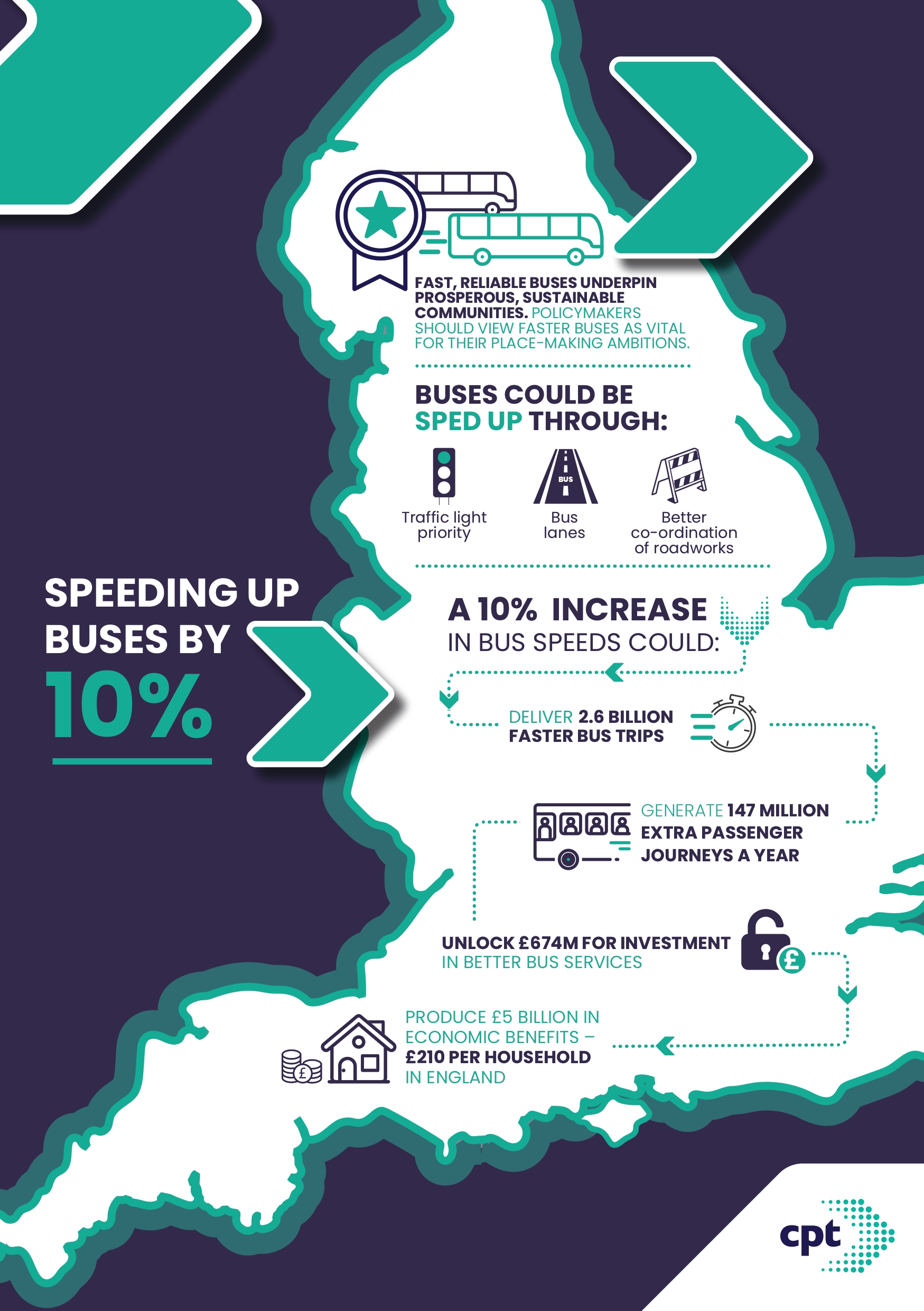
New research from the Confederation of Passenger Transport shows what could be achieved. A relatively modest 10% improvement in bus journey times would deliver 2.6 billion faster journeys for existing passengers, generate 147 million additional passenger journeys and provide a £5 billion boost to the national economy.
Passengers would feel the benefits on an everyday basis, reaching appointments more quickly, getting to work on time and relieving the frustration of sitting motionless.
Shaving 10% off journey times would reduce costs by 7.5%, saving £511 million annually across England that could be invested in, say, zero emission buses or other local authority priorities.
More reliable services would encourage more people to leave their cars at home, particularly at peak times. That would reduce congestion for every road user, improve air quality and help cut transport emissions.
There is also a powerful economic case. Time saved on journeys is time that can be used more productively, whether that be working, studying, or spending time in town and city centres. Bus passengers spend a pound out of every £10 spent on local high streets - faster and more reliable services would bring a steady flow of customers to local businesses.
So how can this be achieved? Delivering these benefits will require coordinated, industry-wide action. Many of the key levers sit with local authorities, but faster, more reliable buses will only be delivered through adequate funding from national government and collaboration with operators and wider delivery partners.
The first lever is road space priority. More bus lanes on major roads, including those operating around the clock where needed, remain one of the most effective ways to take public transport out of congestion. An investment of £200 million a year in bus priority would generate £1 billion a year in economic benefits, highlighting the value of investment in bus priority measures to the taxpayer.
Additionally, technology that gives buses priority at traffic lights can play an important role in improving journey times, particularly by helping services move more quickly through junctions and other bottlenecks. The fact that it can deliver significant benefits without requiring major changes to road layouts makes it especially valuable in areas where space is constrained.
Street works are another area where better coordination could deliver real benefits. Roadworks and utility works have contributed to a 13.5% real-terms increase in bus operators’ costs per kilometre since 2019. Earlier notice, better sequencing and stronger management of works on the busiest bus routes would help prevent unnecessary disruption.
We know priority schemes can deliver strong returns. The Eclipse Busway in Hampshire, which opened in 2012, recorded a benefit-cost ratio of 6.94. That is a powerful example of how well-designed schemes can be more than transport interventions, they support productivity, improve connectivity and increase local growth that benefits all stakeholders.
No single organisation can deliver these improvements alone. Local authorities control the roads, operators understand how services function in practice, and national government provides much of the policy framework and funding. Success depends on all three working together.
With public finances and operating costs under pressure, improving bus speeds is a practical way to make journeys more reliable, protect local networks and support economic growth. Our research shows the opportunity is clear but securing it will require sustained investment and much closer collaboration between government, councils and operators.