July 08 2026
Graham Vidler is Chief Executive at CPT
Could Andy Burnham be the first Prime Minister propelled into Downing Street by bus? His track record as Mayor of Greater Manchester has impressed voters and politicians alike – and at the heart of his legacy lies a fleet of yellow buses.
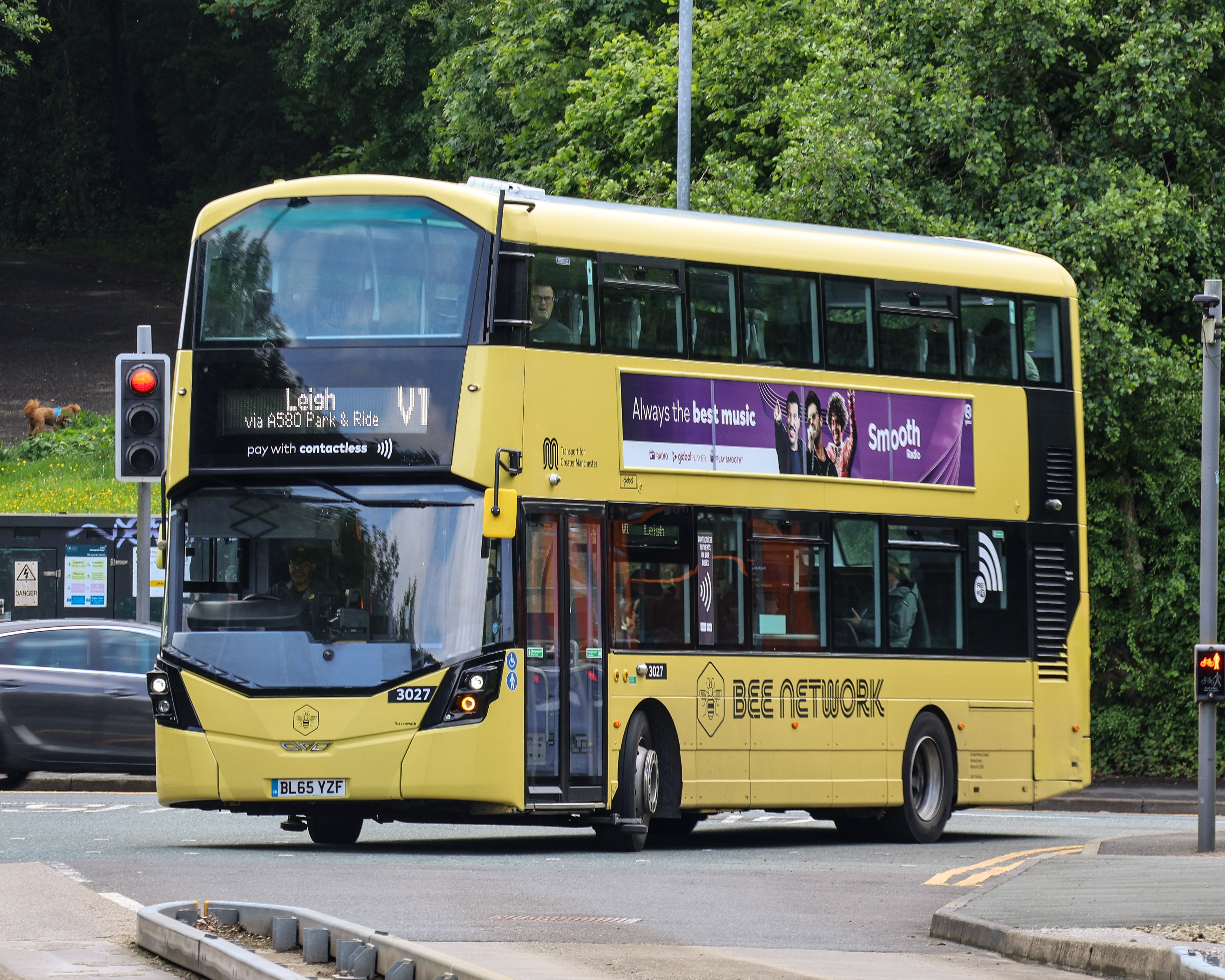
Manchester’s Bee Network, first mobilised in Bolton and Wigan in September 2023, is approaching its third birthday. It was envisaged by Burnham as “a fully integrated, world-class transport system for our global city region”. And it’s hailed by many commentators as a model of success.
There is no doubt that Manchester’s bus regulation model is a ground breaking exercise in local authority control of public transport. But can it be held up as a template for the rest of the country to follow?
In a progress report in June 2025, Transport for Greater Manchester set out some achievements of Bee Network bus performance – a 14% increase in bus journeys in the first two franchising areas, punctuality up from 66% to 80% and a flat £2 fare for single journeys. Of the bus fleet, 17% are zero emission and three quarters of buses are less than four years old.
It is worth emphasising that all of this has been delivered in partnership with the private sector. Under the Bee Network model, TfGM specifies routes, fares and frequencies. But buses are operated on a for-profit basis largely by CPT members, and the drivers and engineers are all employed by private sector businesses.
An essential ingredient is hard cash. Official TfGM figures suggest the move to bus franchising in Manchester cost a cool £134 million. To be clear, that's just the cost of getting the new system set up and doesn't, in itself, produce any improvements for passengers.
Translating regulatory change into passenger benefit requires additional, recurring expenditure on things like subsidising lower fares for passengers or paying operators to run extra buses to counter the impacts of congestion. That's why net expenditure on buses (that is, costs minus fares paid by passengers) in GM is now up to £227m per year and rising.
That’s a reminder that bus franchising is, in general, expensive. Long before Manchester franchised, London tended to be held up as a gold standard for buses – but it comes at a cost. Sir Sadiq Khan told the London Assembly in March that London’s bus network required an operating subsidy of £1.1 billion for 2025 to 2026, up from £600 million prior to the pandemic. This is forecast to rise to £1.7 billion if current trends continue.
Digging a little deeper, operators report that Manchester’s punctuality has improved by adding more buses into the system. The PVR – Peak Vehicle Requirement – has been raised, which means more buses are available to run services during the rush hour.
But little has been done to tackle the root cause of unreliability – traffic congestion – which means that bus passengers are still stuck in steadily worsening jams.
The model of bus regulation pursued by Burnham is the most tightly controlled on the spectrum. Manchester, unlike London, has opted for public ownership of buses and depots, which puts assets on the public balance sheet and maximum financial risk onto the taxpayer.
Under the Bee Network model, Manchester is divided into nine chunks, with a single large contract for each. The size of the contracts locked out small and medium sized bus companies, which weren’t able to compete at the scale required. Other franchising authorities have since taken steps to address this, such as making smaller lot sizes available and reducing the burden of administration.
Since Manchester franchised its buses, a myth has been perpetuated that the commercial model elsewhere in the country has failed. This is simply untrue. According to the government’s independent statutory body Transport Focus, satisfaction with bus services nationwide rose from 83% to 85% last year.
In many parts of the country, bus services are thriving. Over the last two years, passenger numbers have risen by more than 20% in places as diverse as Leicester, Warrington, Stoke, Luton, Norfolk, Portsmouth, Surrey and Cornwall – outstripping growth in Manchester.
But these short-term successes cannot conceal the fact that bus patronage has been in long-term decline. This is largely down to worsening traffic congestion – which has lowered England’s average bus speed to just 11.7mph outside London – and to local authority austerity, which has meant steady cuts to support for socially important but commercially unviable routes. There is scant evidence that it is down to a lack of regulation.
Where change is needed, there are cheaper ways to regulate local bus services than the Manchester model – under some frameworks, assets can be owned by operators, and more leeway can be provided for entrepreneurial promotional offers to drive revenue. When it comes to England’s 79 widely varying transport authorities, one size doesn’t fit all.
None of this is to dismiss the Bee Network’s popularity. As mayor, Burnham recognised the desirability of integration – of bringing buses into a single brand with trams, bikes and eventually suburban rail, and of enabling through-ticketing. That is without a doubt a benefit for Manchester, a densely populated urban area, although it is less essential in smaller cities, or rural areas.
Furthermore, Burnham has been one of the first leaders to think seriously about integrating coaches into local transport. In Manchester, customers can buy coach tickets and view scheduled coach information in the Bee Network app. The city has made sure that bus lanes are open to coaches, and that there are adequate drop-off and pick-up points.
Better connected transport is popular with the public. Good marketing, and branding that creates a sense of civic pride, has been shrewdly and smartly deployed in Manchester, too.
Any investment in public transport that encourages more customers onto the buses is to be applauded. And the Bee Network has certainly succeeded on those terms. But there are many different ways to run a bus network – Manchester’s model might be right for Manchester, but it wouldn’t be affordable, or appropriate, everywhere.