May 14 2026
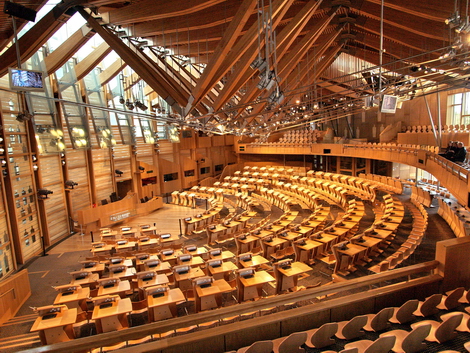
The new Scottish Parliament will be sworn in today and Senior Public Affairs Manager, Sara Collier, gives her thoughts on how the future of bus and coach in Scotland can be shaped by the incoming Government.
The first 100 days of a government often reveal the difference between political ambition and practical delivery. In transport policy, that distinction matters enormously.
When we summarised the manifesto commitments of the major parties a few weeks ago, we stressed the importance of strongly evaluating the operation and impact of the regional £2 fare cap pilot which recently started in the Highlands and Islands.
It was therefore notable to hear the SNP move beyond a long-term commitment to legislate for a £2 fare cap, by proposing an extension of the current pilot to local authorities within the SPT region during the Government’s first 100 days.
An expansion to another major region of Scotland would inevitably raise questions about fairness and consistency for passengers (and operators) elsewhere in the country.
Operators and key stakeholders, including SPT, will also require clarity around funding, operations, eligibility and exit strategy to support both short and long-term planning.
For the (extended) pilot to succeed, Ministers will need to address several critical issues early:
- How (additional) demand will be modelled and funded (including what is in/out of scope)
- The implications for integrated ticketing schemes including ZoneCard and Tripper
- The impacts on other transport modes including the Glasgow Subway and Scotrail services in the region
- The operational and back-office system changes required to implement the scheme .
Ambitious transport policy only succeeds if government works through the practical realities of delivery from the outset. Without careful consideration of deliverability in the short and longer term it could risk disappointing passengers, communities, and industry alike.
CPT Scotland is not opposed to a £2 fare cap pilot, or any other intervention to improve bus patronage. We are well positioned to assist the incoming Government and responsible Ministers, building on our strong track record of working with the Scottish Government and Transport Scotland on issues such as the concessionary travel schemes, anti-social behaviour, and other recent pilots such as free bus travel for asylum seekers. We hope to continue this positive and constructive relationship.
These decisions are also being made against an uncertain global backdrop. Some operators have experienced increases to their fuel and related operational costs due to the conflict in Iran. Any potential future disruption to fuel supply, and other supply chain issues may need to take precedence for Governments across the UK.
The first 100 days are an opportunity for Scotland’s next government to demonstrate that transport policy will be shaped not simply by announcements, but by partnership, deliverability, and long-term thinking. Decisions taken early in this parliamentary term will influence investment, connectivity, and passenger confidence for years to come.